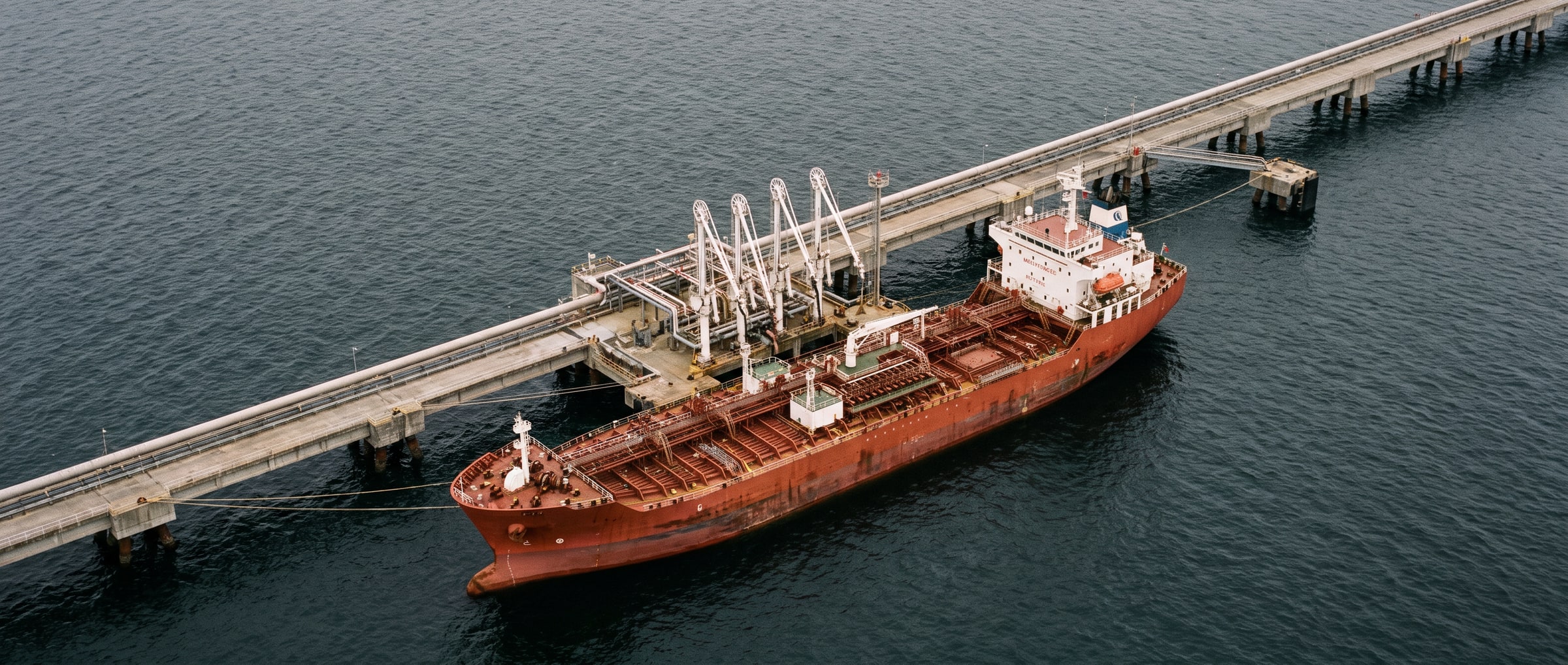
The work has
a geography.
Every position below is somewhere specific, with a jetty, a road or a boundary line attached to it. This is not a target list. It is where the desk is engaged.
Four territories.
Two are demand: import markets still early in the switch to clean fuel. One is supply, and it is where we sit. The fourth is land, and it is the one you can walk.
South Asia
Household and commercial LPG adoption compounding against clean-cooking policy and cylinder distribution reaching tens of millions of homes. The constraint is draft-limited terminals, scarce pressurised coastal tonnage and storage measured in days.
West Africa
The same demand curve, earlier on it, and a harder last hundred miles. Ship-to-ship lightering at offshore anchorages and shuttle economics decide delivered cost long after the cargo has left the export basin.
US Gulf Coast
The supply side and the desk. Cargoes into both regions come out of two export basins, and delivered economics turn on which one a cargo leaves from. We price and structure against both from here.
Costa Rica
A coastal land mandate on the Golfo de Papagayo. Approximately 3,900 acres in two parcels between Liberia’s international airport and the Peninsula Papagayo resort cluster, thirty years in one ownership and never offered to the market.
Territory file, survey topography and a navigable terrain model sit behind an access code.
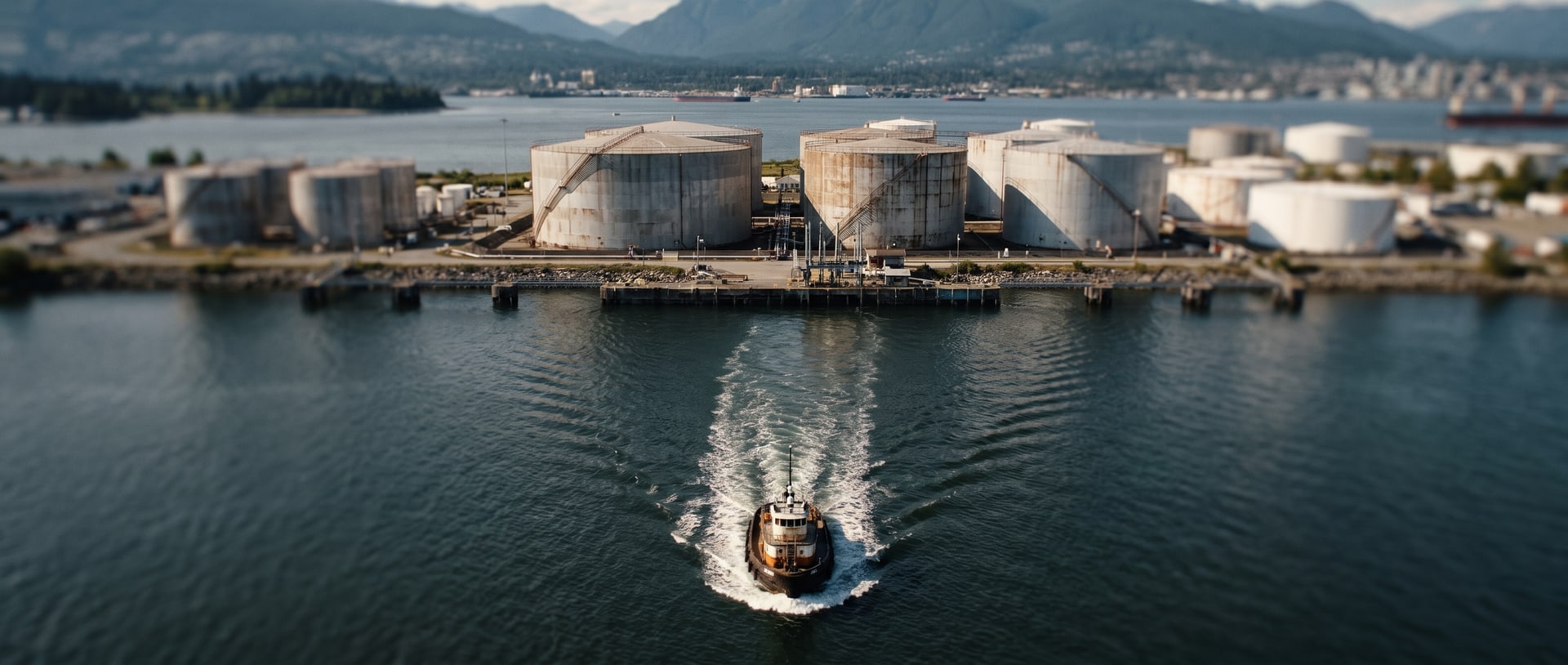
“A map tells you where something is. A territory tells you what it costs to get there.”
How we choose our ground
Some files are
issued, not published.
Where a counterparty has asked for confidentiality, the territory file sits behind a code issued to a named party. If you are expecting one and do not have it, ask.
Request access →